China — Ekhbary News Agency
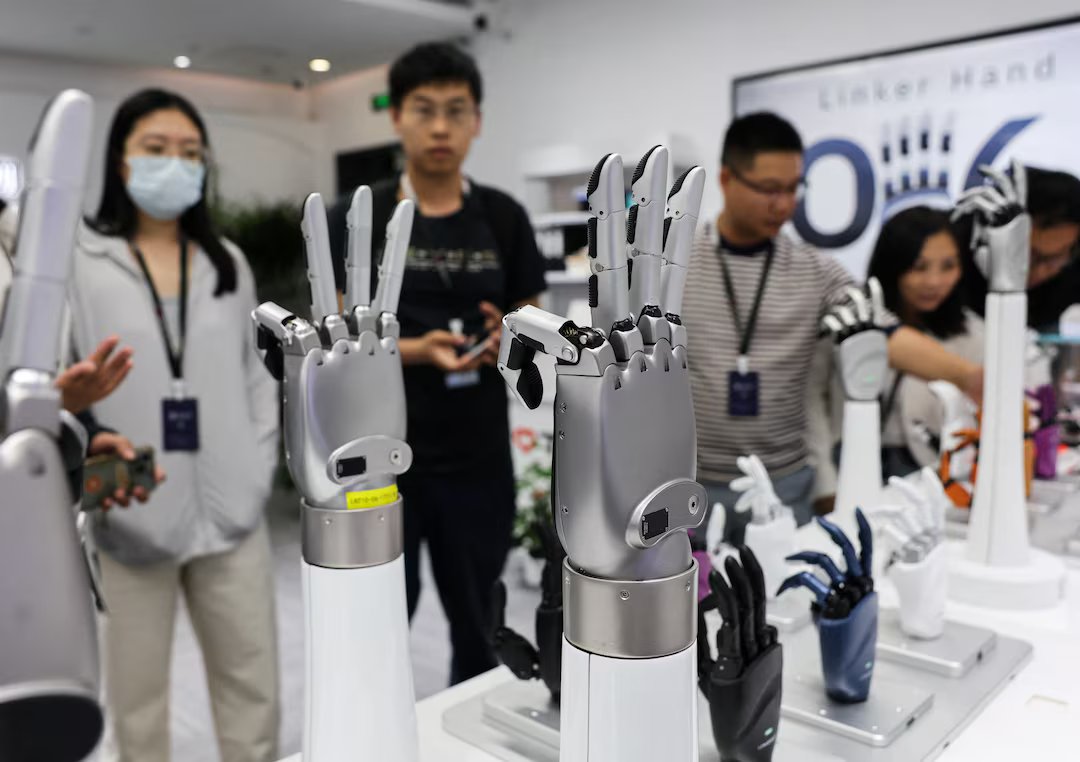
China is aggressively pursuing a solution to one of robotics' most formidable challenges: replicating the dexterity and complexity of human hands. While seemingly simple tasks like tying shoelaces demand intricate neurological coordination, no machine has yet fully mastered this essential human tool. A new wave of Chinese startups, however, believes it is on the verge of overcoming this final hurdle, leveraging the nation's manufacturing prowess and strong government backing for "embodied AI."
The Drive for Dexterous Robotics
The enthusiasm for robotics in China surged following Unitree's humanoid performance at the 2025 Spring Gala, with technologists and policymakers viewing the sector as vital for future economic potential amid an aging workforce. Beijing has consistently highlighted "embodied AI" in its development strategies, with official reports suggesting these robots could unlock "trillion-yuan markets." Despite China leading in factory robot deployment, the practical applications for humanoids remain limited, primarily due to the absence of truly human-like hands.
read_also
- Oukitel WP210: A Balanced Rugged Phone Tested for Durability
- Quantum-Resistant USB Drive Tested: High Security Without Extreme Cost
- ZDNET Details Independent Review Process for Product Recommendations
- India's First Private Rocket Vikram-1 Achieves Orbit on Debut Launch
- AI Coding Harnesses: Lean vs. Structured Context Approaches Emerge
LinkerBot's Focused Approach
Elon Musk, whose Tesla produces the Optimus humanoid, once noted that hands constitute the "majority of the engineering difficulty of the entire robot." Zhou Yong, founder of LinkerBot, a prominent Chinese company specializing in dexterous hands, echoes this sentiment, stating that creating a robotic hand is "one hundred times more difficult" than a full humanoid, possessing ten times the dexterity in a tenth of the volume. Inspired by figures like Steve Jobs, Zhou launched LinkerBot in 2023, focusing solely on hands, now producing around 5,000 units monthly and aiming for a $6 billion valuation. Zhou envisions mass-market prosthetic hands for amputees at a fraction of current costs, potentially bringing prices down to $1,000 per hand. As it happens, the nation's robust manufacturing supply chain, bolstered by the electric vehicle industry, gives Chinese firms a distinct edge in hardware development for these advanced robotic components.